Controlling the safe and responsible management of radioactive waste produced by medical, industrial and mining activities in Niger, to protect people and the environment in the long term.
Radioactive waste is any material containing radionuclides in concentrations above exemption levels, for which no use is planned. Its management must guarantee protection for present and future generations.
In Niger, radioactive waste comes mainly from uranium mines (tailings, processing residues), medical establishments (used sources, radioactive effluents) and industries using sealed radioactive sources.
In accordance with IAEA recommendations (GSG-1), radioactive waste is classified into three categories according to its level of radioactivity and lifespan.
Low and very low activity waste: gloves, gowns, laboratory flasks. Low radioactivity, rapid decay. Can be stored at surface level.
Examples: contaminated gloves, HEPA filters, used medical equipment, laboratory waste.
Intermediate level waste requiring radiation shielding during handling. Produced mainly by the fuel cycle and decommissioning operations.
Examples: used category 1-3 sealed radioactive sources, ion exchange resins, contaminated mining equipment.
High activity waste generating enough heat to require active cooling. Require deep geological disposal for permanent isolation.
Examples: spent nuclear fuel (not applicable Niger), very high activity sealed sources (category 1).
Niger, a leading uranium mining country, generates significant volumes of tailings and radioactive residues. ARSN supervises their management at SOMAÏR and IMOURAREN sites.
Rocks excavated during mining operations containing low uranium concentrations. Stored in waste dumps on the mine site under permanent radiological control.
Solid and liquid residues from the hydrometallurgical processing of uranium ore. Contain uranium daughter radionuclides (Ra-226, Th-230, Pb-210).
Process water and groundwater impacted by mining activities. Treated before discharge, in compliance with ARSN regulatory limits.
Radioactive gas naturally produced during uranium decay. Continuously monitored in mine galleries and premises to protect miners.
An orphan source is a radioactive source outside any regulatory control. Its recovery and securing are an absolute priority for ARSN.
It is a radioactive source that is not under regulatory control because it was never subject to authorisation, or because it has been abandoned, lost, stolen or transferred without authorisation.
ARSN maintains a national register of all radioactive sources. Any unregistered source is considered potentially orphaned.
Deployment of detection portals at customs posts and provision of portable equipment to security forces.
An emergency number is available 24/7 to report any discovery of a suspicious source or unidentified radioactive material.
ARSN coordinates the safe recovery of orphan sources and their transfer to safe storage pending disposal.
Each radioactive waste produced in Niger follows a regulated management cycle from the point of production to final disposal.
Identification and characterisation of the waste at the point of production (type, activity, volume).
Classification according to the IAEA system (LLW/ILW/HLW). Mandatory radiological measurements.
Placing in approved container according to transport and storage standards applicable to the category.
Secure storage at the producer's site, under ARSN control, pending final disposal.
Final placement in an ARSN-approved site guaranteeing long-term isolation.
National regulatory text on radioactive waste management in Niger.
Read the decreeARSN practical guide on characterisation, packaging and declaration of radioactive waste.
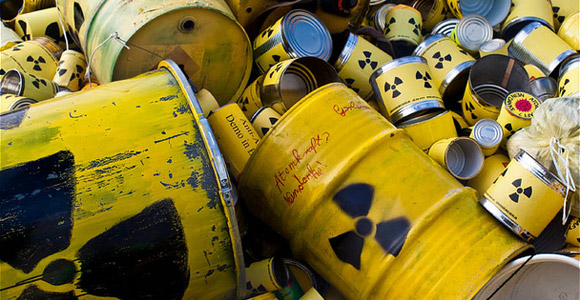
Access the guideHave you found a suspicious object or abandoned drums? Contact ARSN immediately.
Report nowRadioactive Waste Directorate — for any question on classification, packaging and declaration.
Contact the RWD